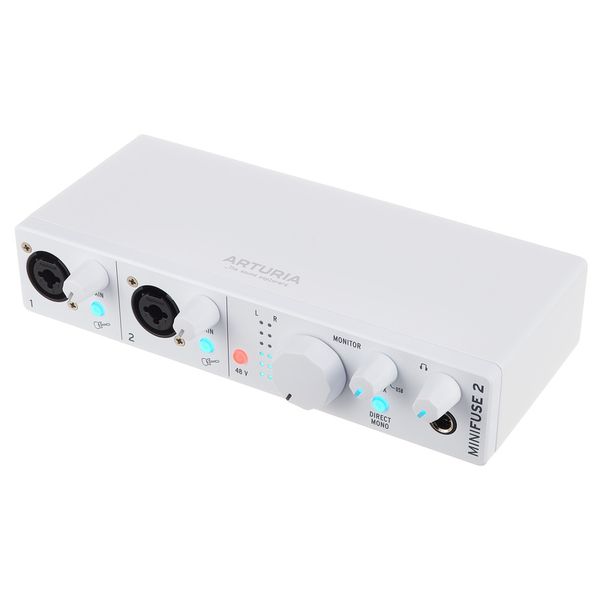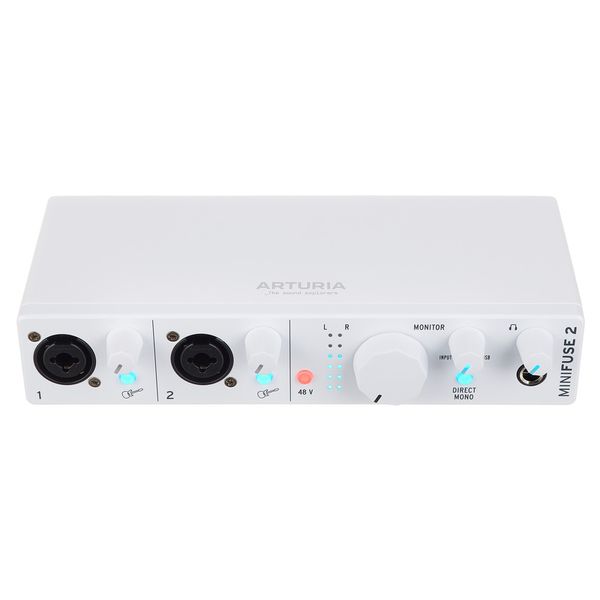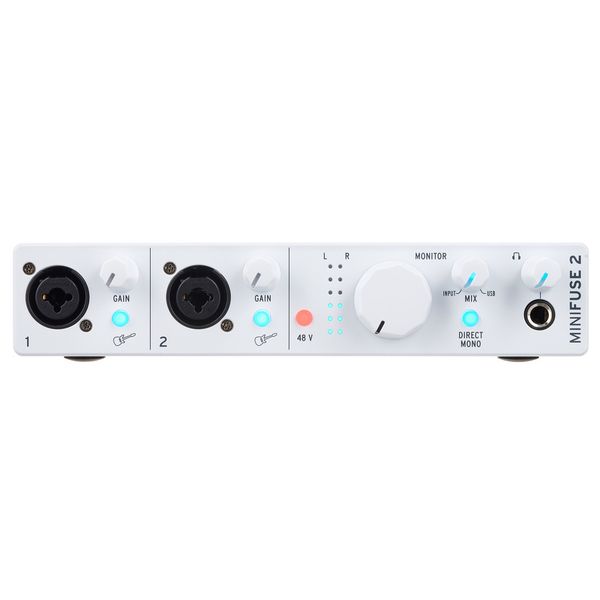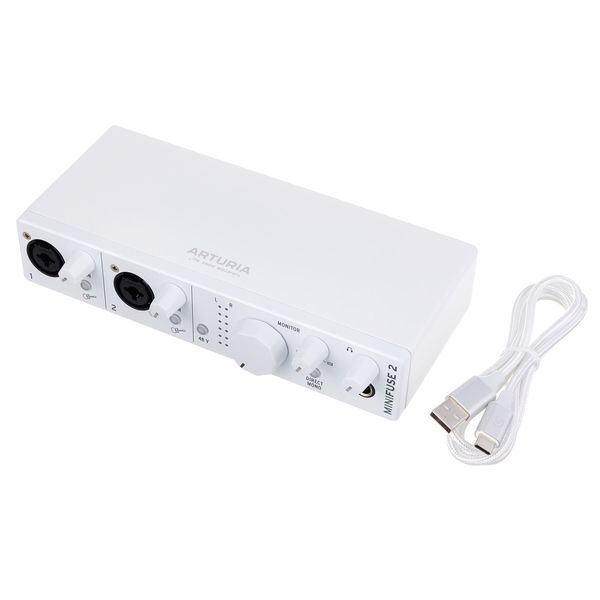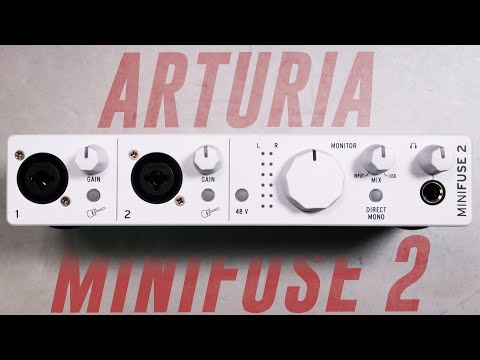
The Arturia MiniFuse 2 is a dual-channel USB-C audio interface designed for refined and focused recording, monitoring, and DAW-based production workflows. Expanding the MiniFuse concept, it features dual microphone inputs, MIDI connectivity, and a versatile monitoring blend control, all aligned with the range’s emphasis on clarity, reliability, and ease of use. MiniFuse 2 delivers credible studio-grade performance in a compact, affordable format, focusing on carefully selected hardware features, clean audio capture, and low-latency operation. A comprehensive bundled software package – including a streamlined DAW environment, creative tools, and access to hundreds of curated presets drawn from Arturia's virtual instrument catalogue – allows projects to move quickly from setup to completion, meaning the MiniFuse 2 can function as the central hub for modern home studios.
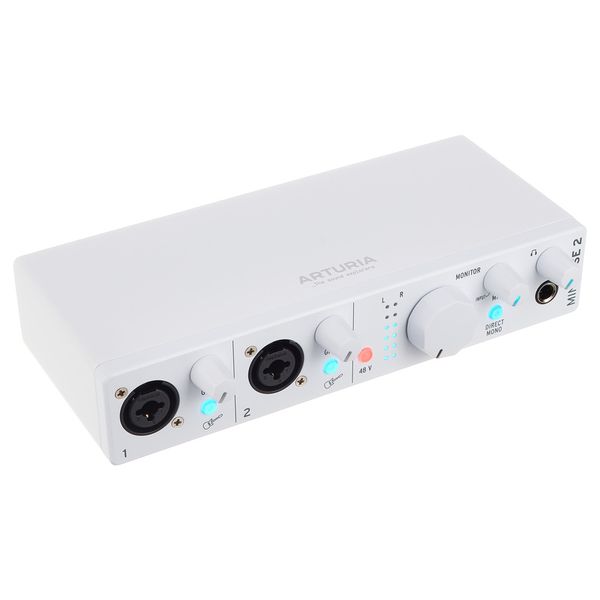
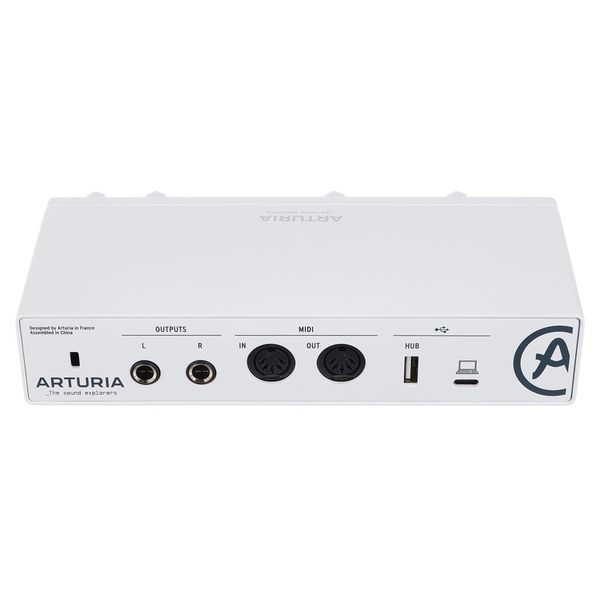
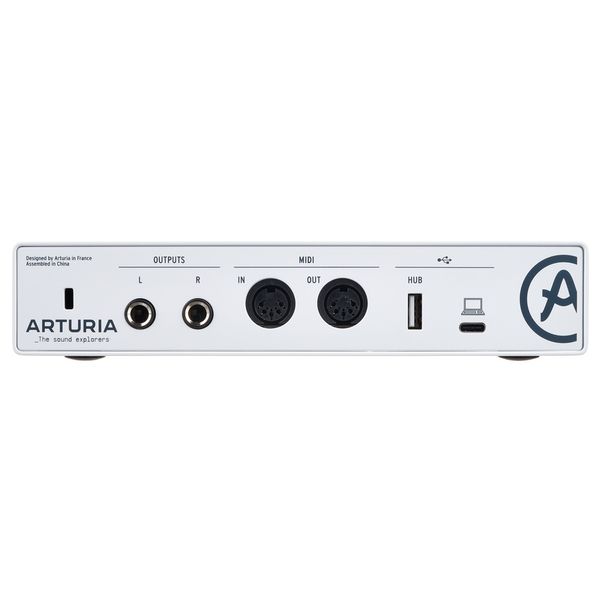
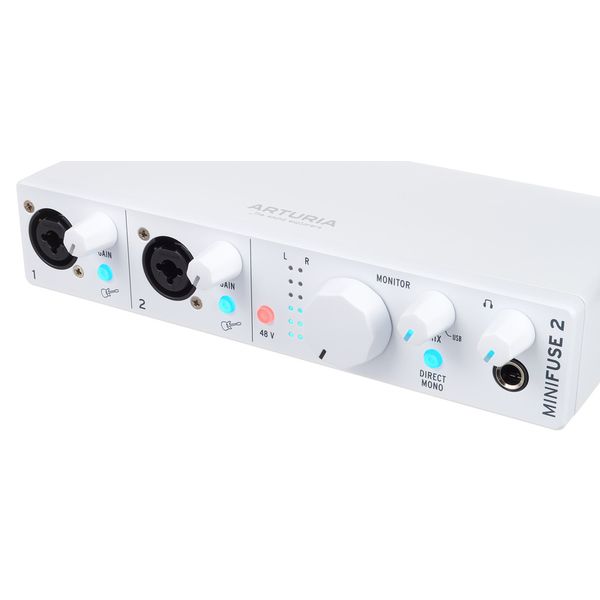
MiniFuse 2 is fitted with two combo XLR/6.3mm inputs for microphones, instruments, or line-level sources – supported by switchable 48V phantom power and up to 56dB of gain. Six LED VU meters provide clear visual feedback for accurate level setting, while individual gain controls and a central monitor knob keep essential adjustments within easy reach. A dedicated monitoring blend control balances live input signals with DAW playback, while a direct mono switch supports precise monitoring when recording multiple sources. The front panel also features a headphone output with independent level control, while the rear panel provides balanced 6.3mm TRS outputs, MIDI DIN In/Out connectivity, USB-C connection, and an integrated USB-A hub for adding peripherals such as MIDI controllers without using an additional computer port.
The two microphone inputs allow both stereo recording of a single source – such as a keyboard or grand piano – and the separate capture of two independent sources – such as guitar and vocals. Line inputs accommodate stereo signals from hardware synthesizers or the main mix output of a console, supporting small studio and live recording setups. MIDI I/O further supports hybrid configurations, enabling external drum machines, keyboards, and sequencers to be synchronised directly with a DAW. Blending direct and playback signals keeps tracking precise and responsive during overdubs, while the loopback channel allows system audio to be recorded alongside live inputs — an essential feature for streaming, content creation, and modern production workflows.
Arturia's success story began with software emulations of well-known analogue synthesizers such as Moog Minimoog, Sequential Prophet-5 and Oberheim SEM. The popular software instruments included in the V Collection are still flagship products of the French developer today. Over time, Arturia has gradually expanded its range and now also offers a host of hardware devices, ranging from synthesizers, keyboard controllers to sequencers. Thus, the former software developer has since also become a household name in the world of analogue synthesizers and other equipment.
Arturia's MiniFuse 2 ships with a focused starter software package designed to support immediate music production. Ableton Live Lite provides a streamlined and flexible DAW for recording and arranging, while Analog Lab Intro offers 500 curated presets drawn from Arturia's instrument catalogue, including a broad range of synth, keyboard, and hybrid sounds derived from Arturia's V Collection, accessible and adjustable via selected macro controls. A suite of Arturia effects – including Rev PLATE-140 reverb, Pre 1973 preamp, Delay TAPE-201 echo, and Chorus JUN-6 – expands mixing and sound-shaping capabilities, complemented by additional third-party tools for guitar processing, vocal production, and creative exploration. Together with the MiniFuse Control Center app, this ecosystem supports a cohesive workflow from an initial idea to the finished track.